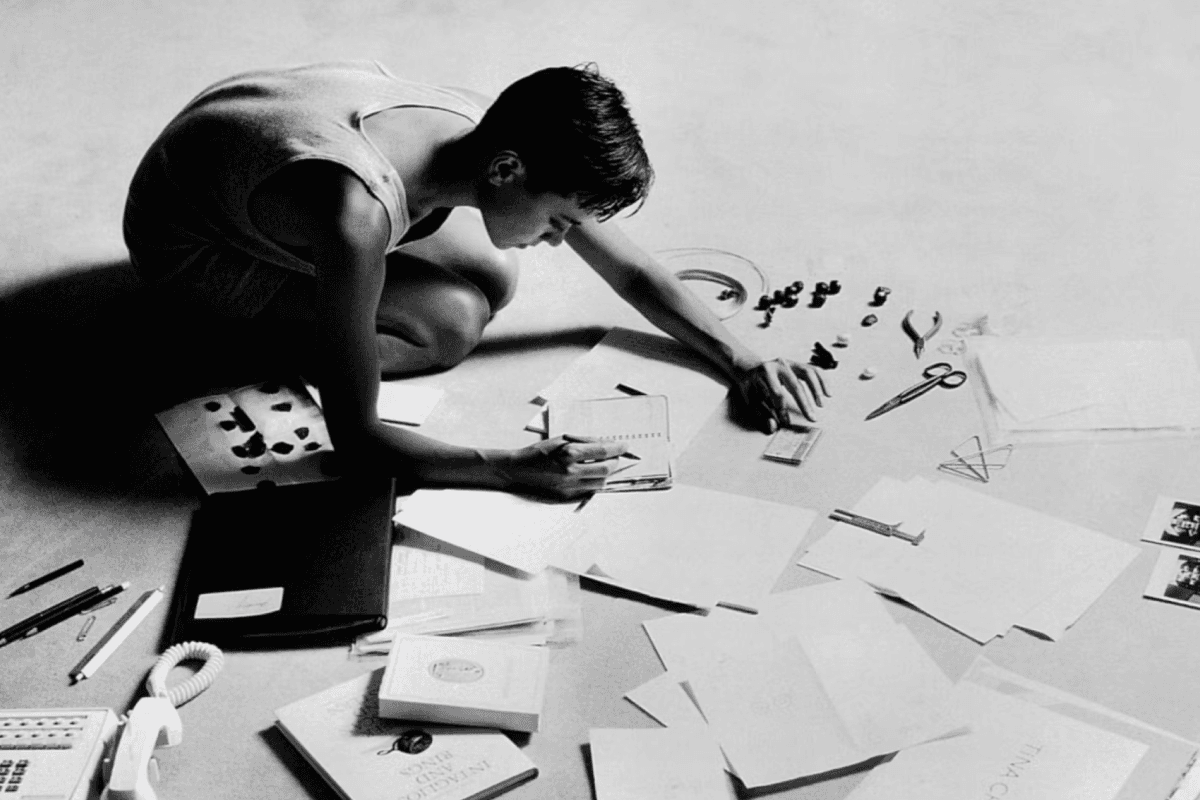
Hand-Writing vs. Typing: Why Paper Matters
Motamo
Jan 1, 2026
Typing captures thoughts. Handwriting processes them. The difference? What happens in your brain.
Norwegian researchers hooked up 256 sensors to people's heads and watched what happened when they wrote by hand versus typed. Handwriting lit up connections across the brain - the parts that handle movement, vision, processing what you feel, and memory. Typing? Almost nothing.
Think of it like this: when you type the word "grief," your fingers make the same basic motion for every letter. But when you write it by hand, you're drawing each letter. Your brain has to coordinate your hand movement with what you're seeing, what you're thinking, what you're feeling. That creates a feedback loop. Your hand makes the shape, your eyes see it form, your brain processes it again. The connection between the action and the memory gets stronger.
Studies show typists tend to copy word-for-word without really thinking. Writers have to slow down enough to actually engage with what they're saying. You can't just transcribe when you're writing by hand. You have to feel it.
The slowness isn't a limitation. It's the whole point. Handwriting creates space between what you feel and how you react. Between the thought and the word. Between who you were and who you're becoming.
This is why MOTAMO is analog-first.
Start with any journal in our collection.
Pick up a pen. Write one sentence. Notice what shifts.